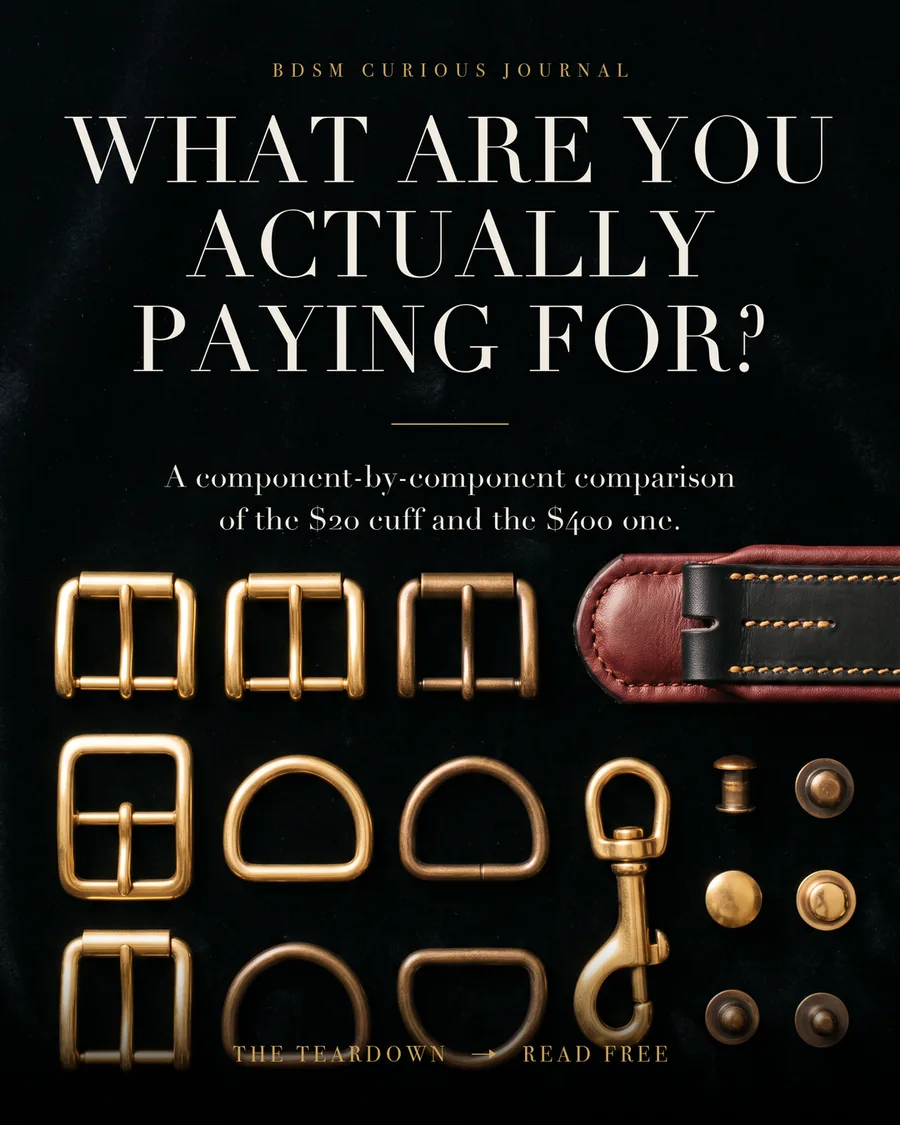
It's the most reasonable objection in the entire category: the marketplace listing shows cuffs for $19.99 with four stars, and a luxury boutique asks $400 for what looks — in a thumbnail — like the same object. Nobody should spend twenty times more on faith alone.
So let's not use faith. Let's use a teardown. When you take both products apart, component by component, the price difference stops being mysterious and becomes an itemized list. Here is what each dollar bracket actually buys.
Component 1: The Strap Material
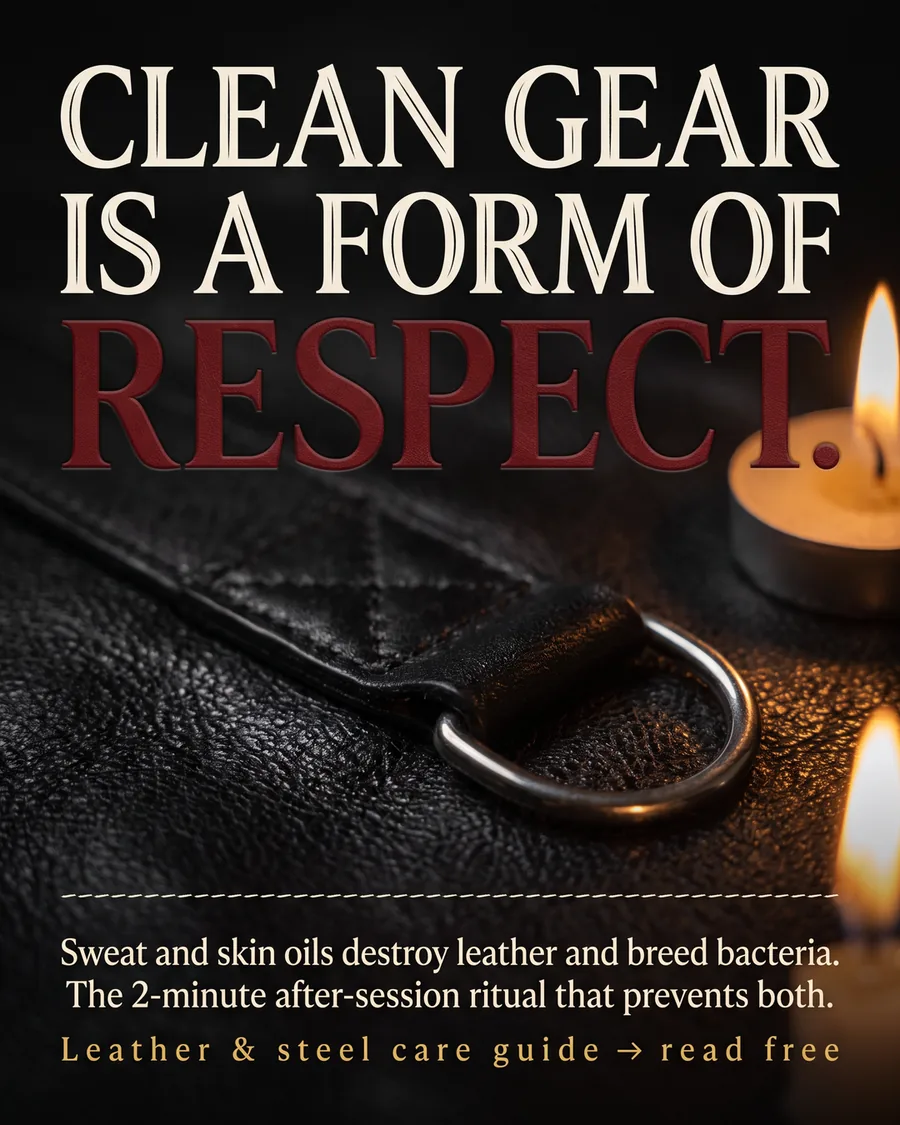
Budget: an unnamed coated fabric — a textile backing under a sprayed skin, chosen on cost, with cut edges left raw against your skin. It creases within weeks and peels within months, because the surface and the substrate were never engineered to stay together.
Luxury: leather and premium technical materials, specified by grade, cut clean and properly finished at every edge. Built to survive flexing, warmth and sweat, which is why good pieces soften and improve over years instead of degrading over months.
Component 2: The Hardware
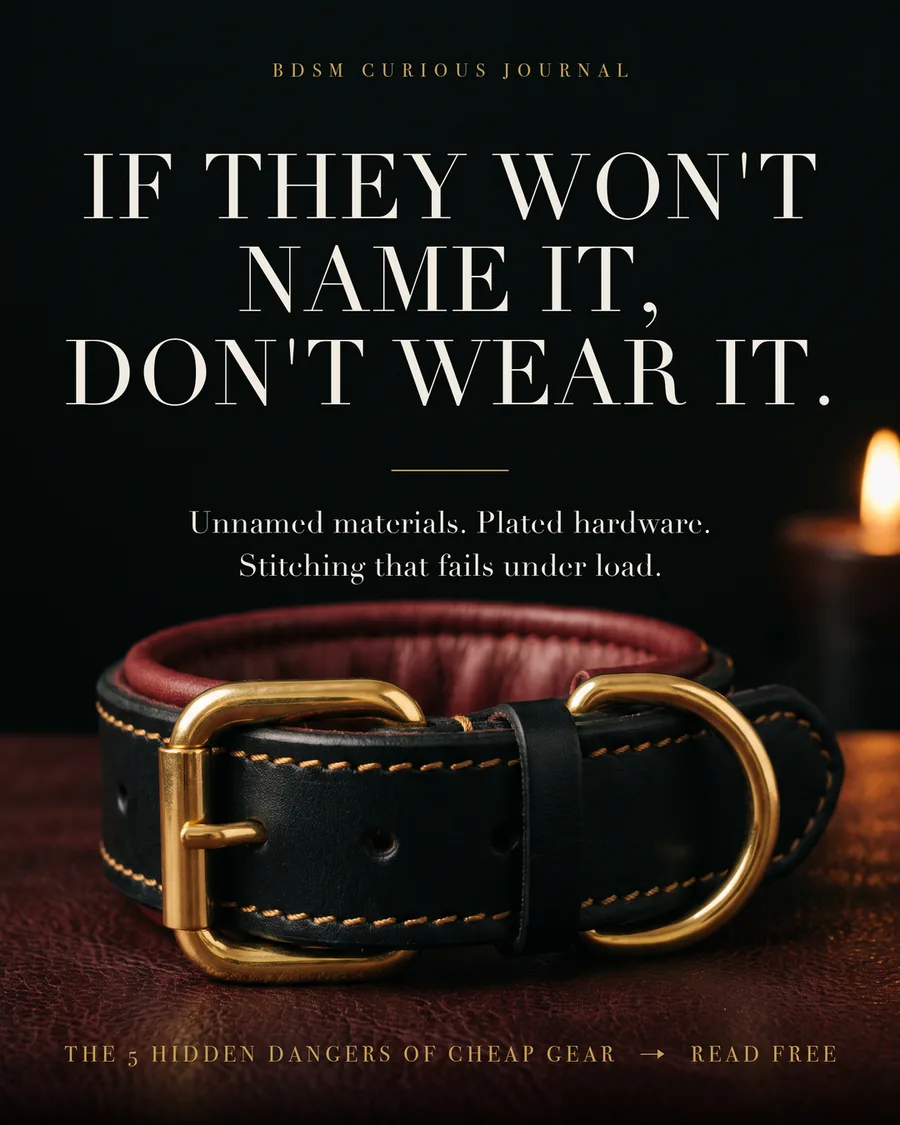
Budget: plated buckles and D-rings, die-cast with visible mould seams and finished in a decorative coating measured in microns. That coating wears through exactly where friction lives — and once it does, whatever is underneath is against your skin. Load ratings are unknown, because nobody tested them.
Luxury: solid, high-grade hardware selected for skin contact and finished through rather than coated — hypoallergenic, weighted in the hand, and engineered around the load it actually has to hold. Nothing plated over plastic.
Component 3: The Stitching and Assembly
Budget: single-run stitching in thin thread, glued linings, D-rings held by the same single seam. Under real pulling force — which is the entire purpose of the object — seams like this fail, and they fail suddenly.
Luxury: doubled and back-tacked stitching at every load point, rivet reinforcement behind hardware, and linings sewn rather than glued. Artisanal pieces are assembled by hand and inspected individually — which is slow, and slow is expensive, and expensive is what holding force reliably costs.
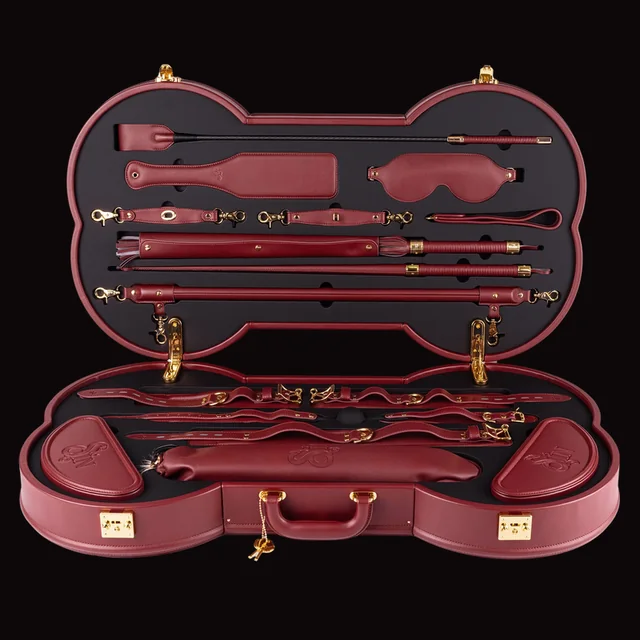
The BONE Collection
Eleven pieces · Eleven matched instruments in a structured, locking presentation case.
Component 4: The Interior — Where Safety Lives
Budget: thin foam under vinyl, or nothing. Narrow, hard-edged straps concentrate pressure directly over wrist nerves — the number-one cause of the tingling and numbness that give restraints a bad name.
Luxury: wide profiles with plush padded linings in velvet or soft leather that spread pressure across the whole contact surface. The comfort is not indulgence; it is the safety mechanism.
The Real Math: Cost Per Year, Not Cost Per Purchase
Budget gear lasts, realistically, a handful of sessions to a year before peeling, seam failure, or hardware corrosion retires it — call it $20–$60 per year, replaced repeatedly, with safety risk included at no extra charge. A luxury set is a buy-once object: a decade of use puts it at a comparable annual cost, minus the failures, the rashes, and the landfill. Budget gear lasts three sessions; luxury gear lasts a lifetime — the cliché survives because the arithmetic keeps proving it.
For readers who want this argument in physical form, our own BONE Collection is where we push it hardest: solid sculptural hardware instead of hollow castings, reinforced load points, leather and premium technical materials over a structured build, and eleven pieces finished by hand in our atelier — engineering quality wearing an haute-couture finish.
When Budget Is Fine — Honestly
Fairness requires saying it: for a one-time curiosity test, soft Velcro cuffs from a reputable maker at $30–$50 are a legitimate entry point — provided you verify hypoallergenic, unplated hardware and padded interiors even at that price. What we recommend against is the middle trap: $80–$150 products with luxury photography and budget components. Read the specification. If it will not name the grade of what touches your skin, the photos are the most expensive part of the product.
The Takeaway
You are not paying $400 for a logo. You are paying for specified materials instead of anonymous ones, solid hardware instead of a coating that flakes, doubled seams instead of hopeful glue, and padding engineered around your anatomy. Whether that is worth it depends on how often, and how long, you intend to trust the object with your body. For most committed couples, the answer settles itself.