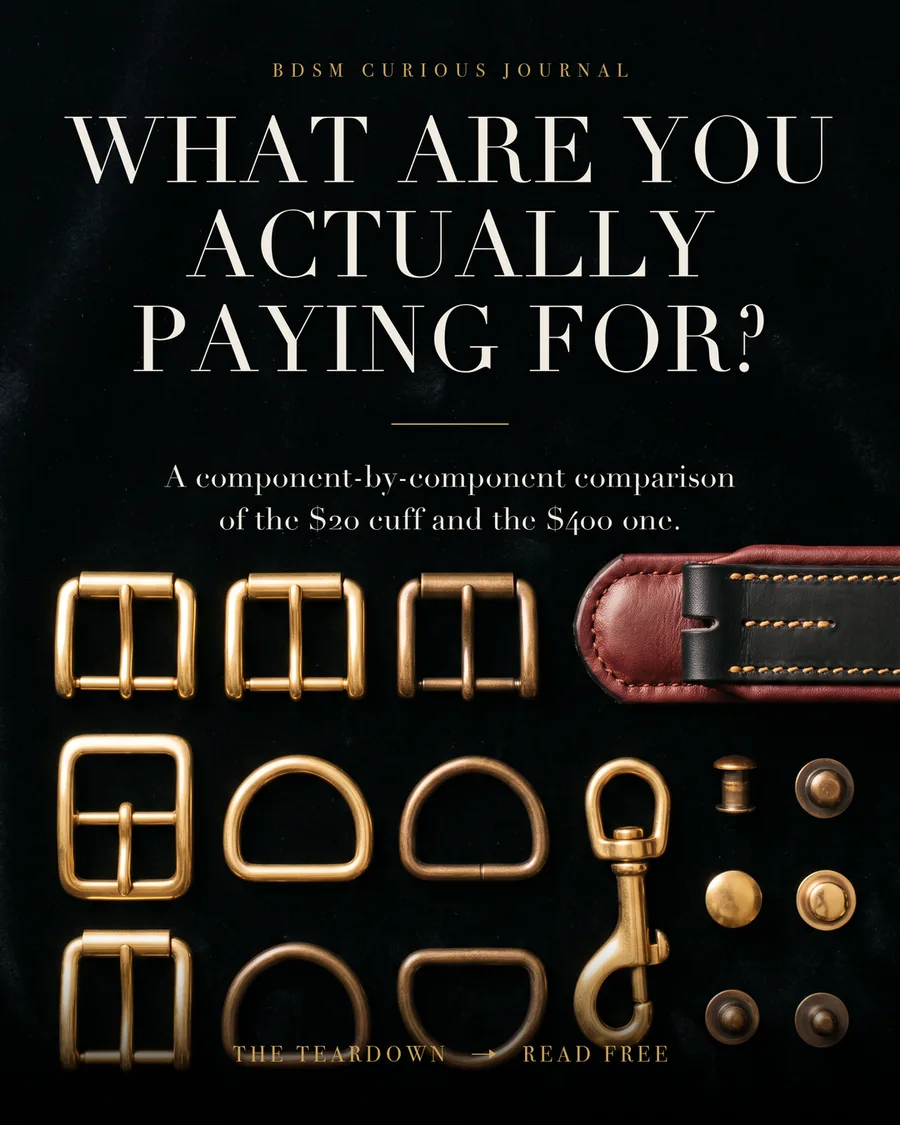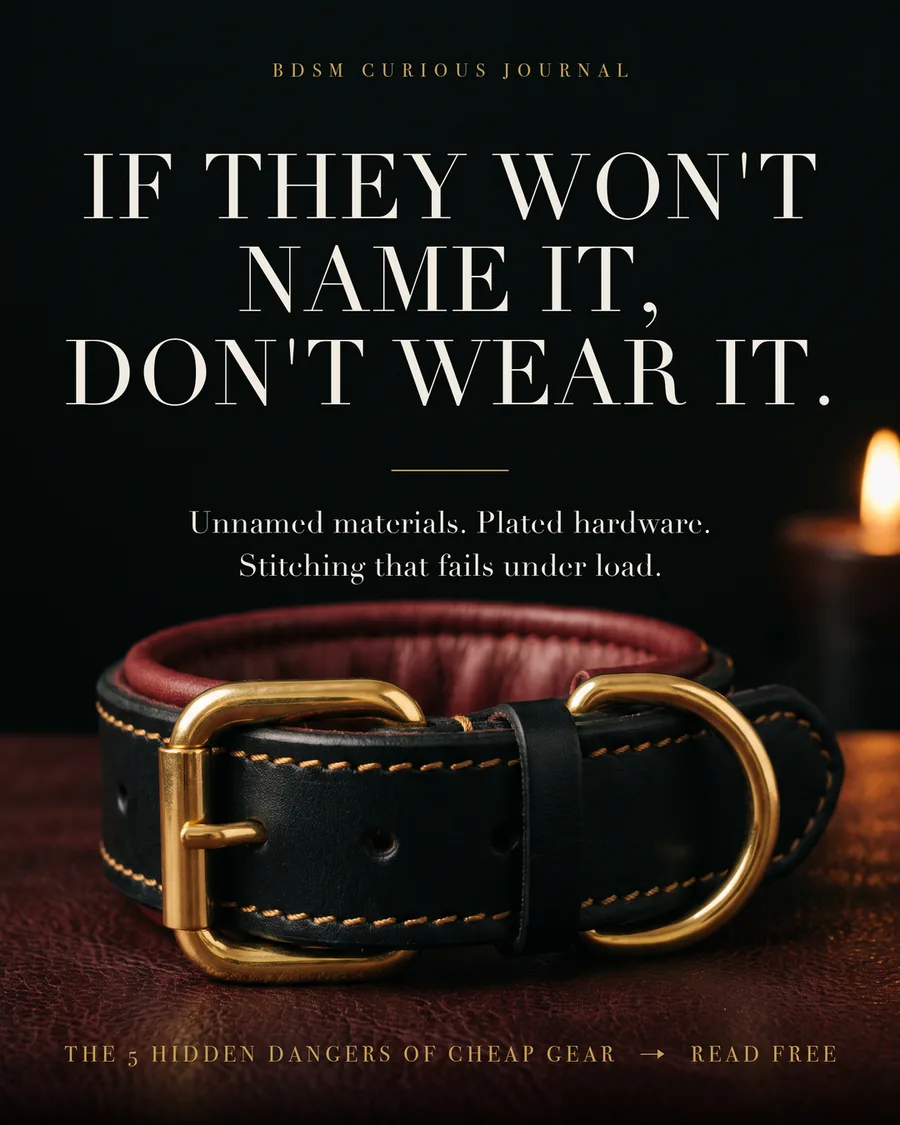
There is a specific moment of doubt that stops many first purchases: the same product seems to exist at $20 and at $400, and nobody explains the difference. Is the expensive one just branding?
Sometimes, yes. But in intimate gear — products that sit against skin, mucous membranes, and joints under load — the price gap usually maps to real, measurable differences in chemistry, metallurgy, and construction. Here are the five failure modes of cheap gear, and the exact quality markers that rule them out.
1. The Unnamed Material
That strong chemical odour coming off the cheapest gear is a real signal. It usually means uncontrolled plasticisers off-gassing from a compound nobody specified — an input chosen purely on cost, from a supplier the seller cannot name.
The warning sign is not a particular material family. Leather, and modern technical materials properly specified and finished, both perform beautifully against skin. The warning sign is anonymity: a listing that will not tell you the grade, the finish, or where the work was done.
Quality marker: a named material with a stated grade and a described finish — and gear that arrives with no chemical smell at all. A page that says only 'PU material', with no grade, no finish and no maker behind it, is telling you it bought the cheapest input available. A page that specifies what it uses and how it is finished is a different class of product entirely.
2. Plated Hardware and the Allergy You Discover Too Late
Roughly one in eight people has some degree of metal sensitivity, and the cheapest hardware is almost always plated: a decorative skin a few microns thick over a core nobody will name. Against dry skin for a minute, fine. Against warm, damp skin under pressure for thirty minutes — after that coating has worn through at the buckle tongue, which is exactly where friction lives — it can produce itching, rash, and contact dermatitis precisely where you least want it.
The failure mode here is the plating, not the metal. Solid, properly graded hardware behaves the same on day one and year five, because there is no coating to wear off.
Quality marker: hardware described as high-grade and hypoallergenic, solid rather than plated, with real weight in the hand. Our own standard at SIN Premium fits in one line: nothing plated over plastic.
3. Stitching That Fails Under Load
A restraint is load-bearing equipment. Novelty cuffs are typically single-stitched with thin polyester thread and glued edges — fine for a photo, dangerous when a person pulls against them. A strap that snaps mid-session doesn't just kill the mood; a sudden release can mean a fall, a strained shoulder, or hardware snapping back against skin.
Quality marker: doubled or reinforced stitching at every stress point, rivets backing the D-ring attachments, and edges that are folded and sewn rather than glued. Turn the cuff inside out in the product photos — quality brands show you the interior; cheap ones never do.
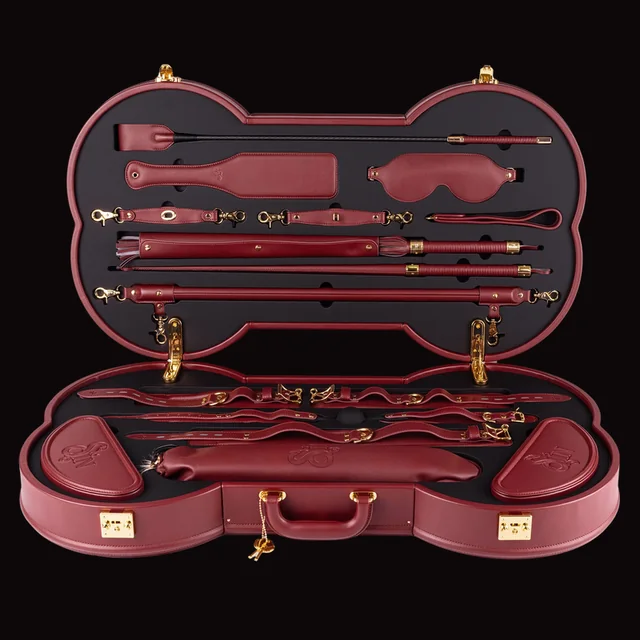
The BONE Collection
Eleven pieces · Eleven matched instruments in a structured, locking presentation case.
4. Sharp Edges and Pressure Points
Injuries from restraints are rarely dramatic; they are abrasions and nerve pressure from thin straps, unfinished rivet backs, and hard plastic edges. A two-centimeter strip of stiff vinyl concentrates all the force of movement onto a narrow band of skin directly over the radial nerve.
Quality marker: wide straps (4cm and up), plush padded linings, rounded polished hardware, and no metal component touching skin directly.
5. No Fast Way Out
The cheapest sets copy the look of serious gear without the engineering: locking buckles with tiny keys, tight sewn loops, hook-and-loop that weakens after ten uses. In any moment of cramp, numbness, or panic, exit speed is the entire safety system.
Quality marker: quick-release buckles or clips operable with one hand, in the dark, in under three seconds.
How to Read a Product Page Like an Expert
Before buying, look for: materials named with a stated grade, closeup photos of stitching and cuff interiors, stated strap widths, an explicit statement about what touches skin, and a maker willing to say where the work is done. For an example of what that disclosure reads like, our own product pages state it plainly — leather and premium technical materials, high-grade hypoallergenic hardware that is never plated over plastic, padded interiors, and every piece hand-finished and inspected in our own atelier. That is the standard any brand, at any price, should be held to.
The Bottom Line
You do not need to spend $400 to be safe — but you do need to refuse products that hide their materials. The real dividing line is not price; it is disclosure. Brands that tell you exactly what touches your skin have nothing to hide. Brands that don't, do.